Tea Time, that sacred appointment with the gloriously hot steamy mug. A time where it is acceptable to skive work, shoot the wind, chew the fat, relax, socialise and generally faff about.
Tea Time we love you.
Considered a very British pastime it is perhaps surprising to learn that we didn’t invent Tea, climatically it would have been impossible, The Chinese did the honours somewhere around 59BC while we were still half ape, here in the Northern reaches.
Britain did not even wholly embrace the concept of Tea culture when it initially became a commodity on the European Market place.
Although forgotten, much like Mr Blairs lackeys, we all have a National Debt of thanks to pay to Catherine of Braganza, wife of Charles II and “Queens” New York namesake. It was Catherine that introduced the concept of Tea Time to the British court of 1662. For the greater public it wasn’t until the 1800’s that Tea really took off as a national pastime.
You are probably wondering why at Wild Food Scotland we are contemplating Tea today as everyone knows tea is grown in the warmer climes of Asia and India, what can Scotland offer us for our daily brew.
Today we are going to explore a medicinal form of Tea, one that has great health benefits and with a drizzle of Lemon and Honey can be thoroughly enjoyed on a daily basis.
Say hello to Pine Needle Tea.
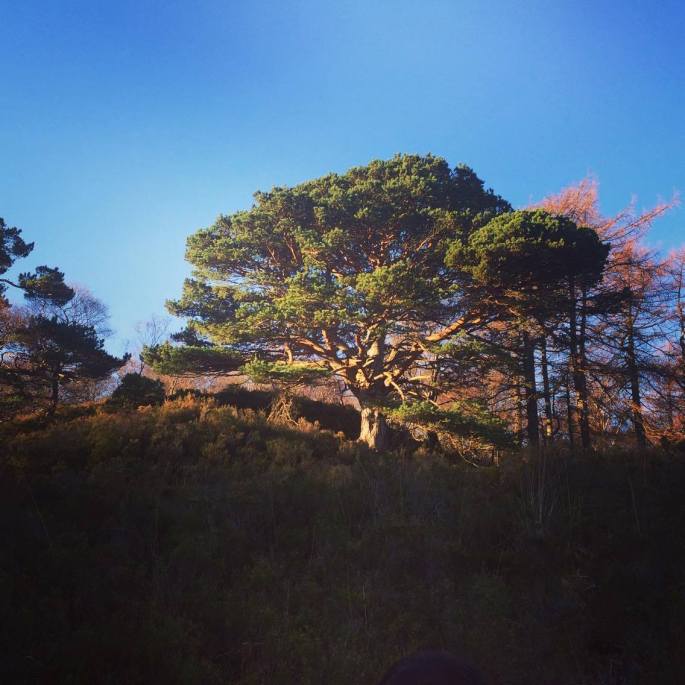
Scotlands “airts and pairts” (countryside) boast many densely populated forests which are primarily Pine. As a harvestable product pine trees are quick growing, hardy and numerous, much like the Scots themselves. Surviving all the weather that can be thrown at them they seem to laze idle on many a slope nearly contemptuous of their environment.
Pound for pound Pine Needles pack five times more Vitamin C than a Lemon and also contain a high count of Vitamin A.
In layman terms Pine Needles are excellent for boosting the Immune System and are full of antioxidants which are critical for healthy vision, hair, skin and neurological functions as well as red blood cell production.
Now as a caveman I would just near boil my water and make my tea with a handful of cut needles, however, one can also steep the needles for a few hours to really draw out the essentials. If using the Tea medicinally one should boil the needles in water for 3-5 minutes, this will draw out the oils in the needle. One can always go down the route of witchcraft and brew a tincture by soaking jar of needles in alcohol.
Each pine needle creates a slightly different taste and this can be experimented with till the user finds a taste to suit. Generally the Tea will be quite astringent and require honey or lemon to make it more palatable. If drinking the tea doesn’t appeal to you don’t worry there are also external applications for the tea.
Used to bathe feet the tea helps relief Athletes foot as it has antiseptic properties, as a face wash it breaks down skin oils and reduces the effects of acne. The tea can also be applied to your luscious locks to reduce itchy scalp and dandruff.
The prize winner for the lassies (women) in the audience has to be that Pine Needles have anti-ageing qualities. The anti-oxidants fight the effects of UV damage and the Vitamin C content contributes to the production of Collagen (what keeps the skin looking young). Can you imagine a world containing a free anti-ageing product… Haud (stop) the bus!
As a wise man once said “on a serious note”…. Pine needle tincture is extremely useful for aiding blood circulation and reduces complaints of swelling commonly associated with arthritis and rheumatism when applied locally on skin. The Needle tincture can also be added to water to relieve sore throat due to its antiseptic properties and will thin mucus and aid in breathing difficulty being as an expectorant. Anemics also benefit from the positive effect it has on red blood cell production.
Seriously the pine needle is banging! We would be mad to ignore its gifts.
A point of interest for any aspiring pine needlers has to be Toxicity; In general all pine species are toxic to a greater or lesser extend much like the Big Mac. However there are a few species to be watched out for of which the most fatal is Yew (Commonly found at burial sites) also in the list of shame is Lodgepole,Ponderosa, Monterey and Norfolk Island Pines. One should always consult their shady search engine or intelligent friend for species identification before committing to a possible night toilet fizz.
In other news…guess what?
Its time for a cup of tea!
Enjoy!

 Wild Food Scotland